
- From 26 November 2026, courts in England and Wales can make stalking protection orders at the end of criminal cases.
- Evidence of tracking, such as a dated record of where a tracker was found, can help the court decide if an order is needed.
- Trackers can be hidden in bags, pockets or cars and may be used without your knowledge.
- If you find a tracker, record details and tell the police if it is safe to do so.
On this page
Why could evidence of tracking help you more in court now?
From 26 November 2026, criminal courts in England and Wales can make a stalking protection order themselves when a case ends, even after a not guilty verdict. Orders are decided on a lower standard of proof than a criminal trial, so a dated record of any tracker and where it was found can carry weight.
Your safety comes first in everything we suggest, so if you are in danger now, call 999. For support while you decide what to do, you can talk to the National Stalking Helpline, run by the Suzy Lamplugh Trust, or the National Domestic Abuse Helpline, run by Refuge.
What the new stalking order rules change
A stalking protection order is a court order that can ban a person from doing certain things, and make them do others, to keep you safe from stalking. Breaking one is a criminal offence.
The Crime and Policing Act 2026 brings in three changes close together. If you think an ex is tracking you and want a record of it, 26 November is the date we would point you to, because it changes how a stalking protection order can come about.
| Date | What changes |
|---|---|
| 25 November 2026 | Changes to domestic abuse protection orders, which do not yet apply in civil or family court cases |
| 26 November 2026 | Courts can make a stalking protection order at the end of a criminal case |
| 7 December 2026 | The Home Secretary’s duty to issue official guidance on stalking for police, teachers and healthcare workers comes into force |
These dates apply in England and Wales.
Before these changes, only the police could apply for a stalking protection order, and they did so at a magistrates’ court. They can still do so, and under the new rules the court hearing a criminal case can also make one itself when the case ends. So if your ex is found not guilty, or wins an appeal against a conviction, the court can still consider whether an order is needed to protect you.
When the court decides whether to make an order, it uses the civil standard of proof, known as the balance of probability. In plain words, the court asks whether something is more likely than not, and it uses the same test for each ban or requirement it puts in the order.
Can someone hide a tracker in your handbag?
Yes, someone can hide a tracker in a handbag, a coat pocket or a car. A tracker is a small device that sends its location to another person, so whoever hid it can see where you go.
Bags, pockets and the car
Police advice says trackers can be used to stalk people when they are dropped into a bag or pocket, or hidden in a car. Once a tracker is in your handbag, it goes wherever you go, including the days you leave the car at home.
In one recent UK case, a man hid a tracker in his partner’s handbag, where it stayed for months without her noticing, recording her conversations and sending her location to him.
When the car is your main worry, our vehicle bug sweep checks it for trackers and other hidden devices.
Signs someone may be tracking you
In the handbag case, two things made her suspicious. Her partner knew things that had not been said in front of him, and he turned up where she was going. Once she found the tracker, she called the police.
If your ex seems to know where you will be, or repeats something you only said at home or in the car, take it seriously. Check your bag and coat pockets along with the car.
How we check your car and home
If you think your ex has hidden a tracker, we check your car and your home. We often check the car for a tracker alongside the house, and our home bug sweep covers the rooms you live in.
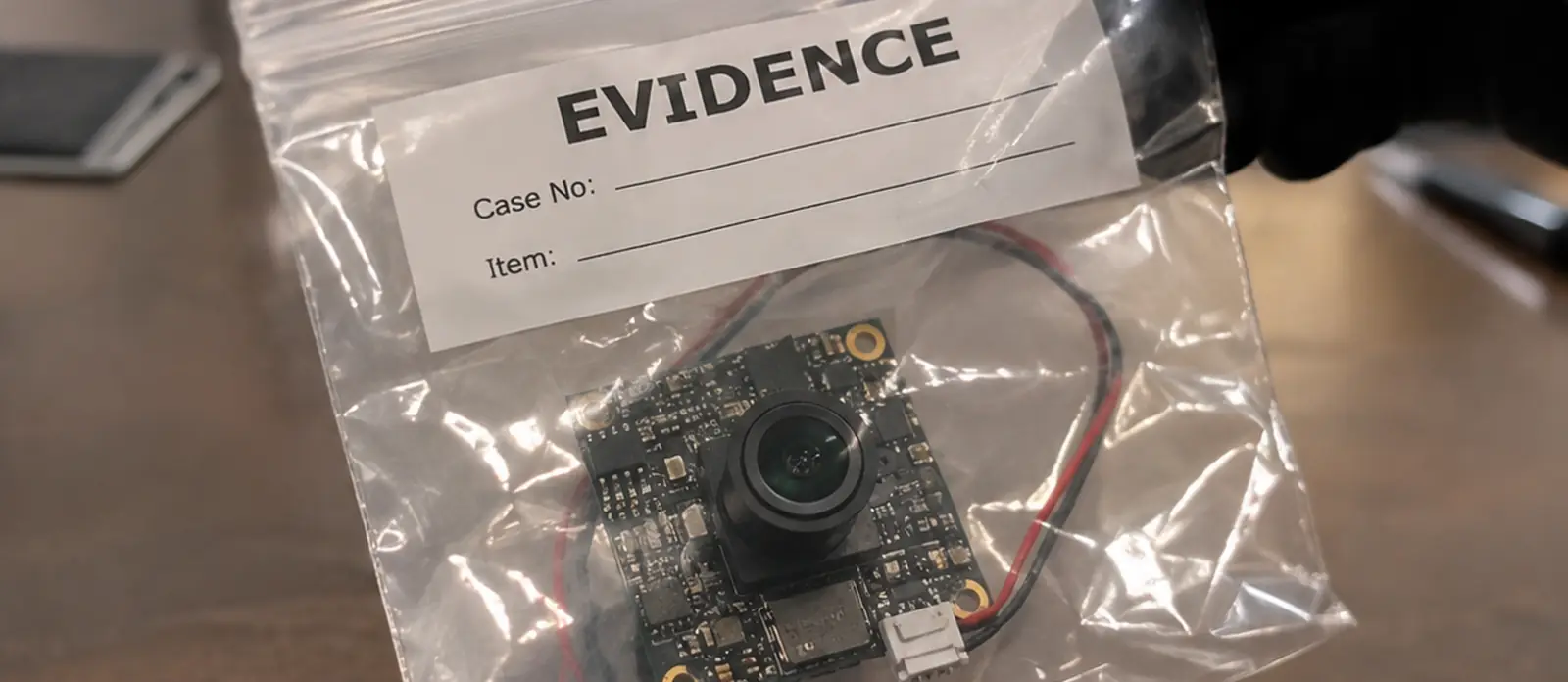
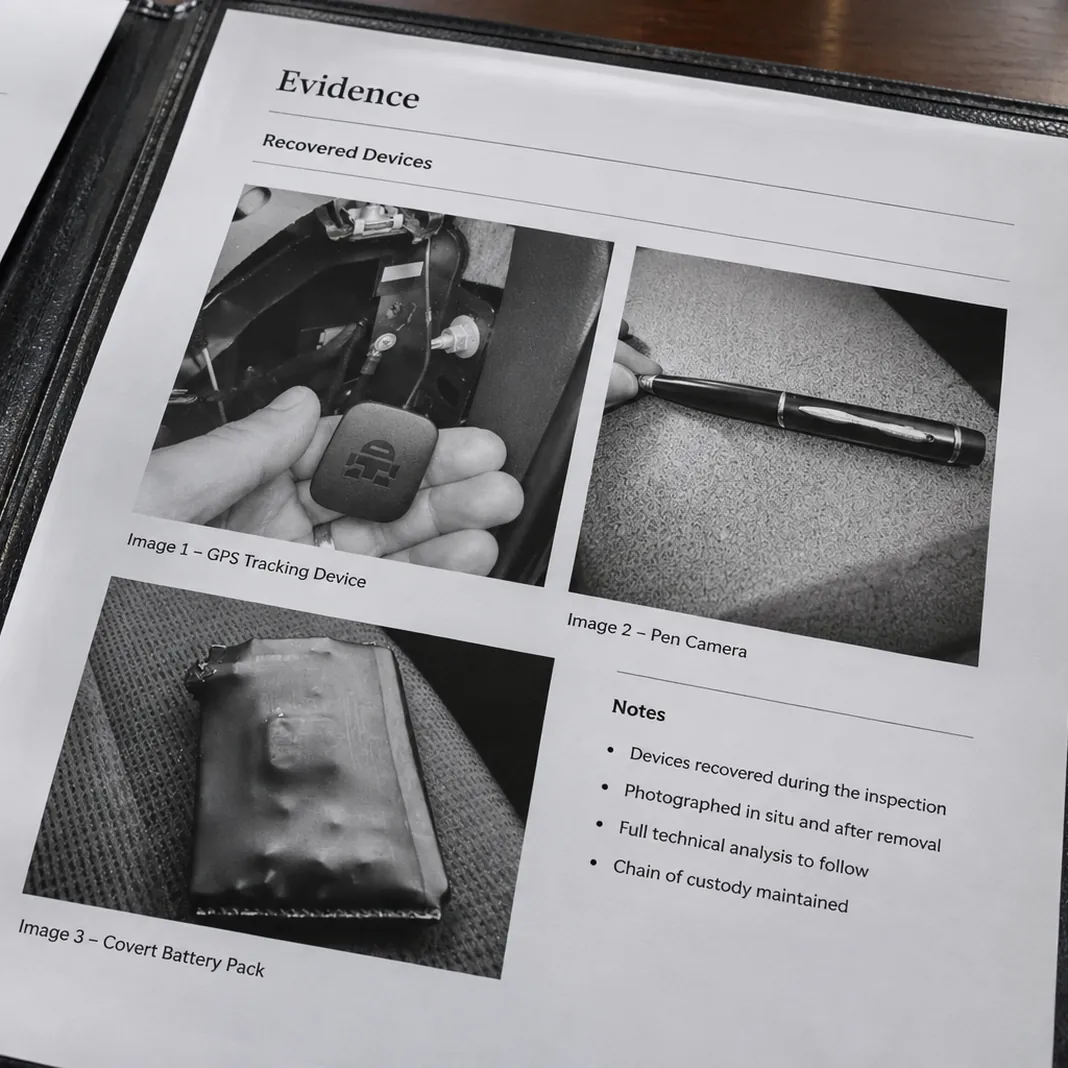
After the visit, every client gets a full TSCM (technical surveillance counter-measures) report, which is our written record of what we found and where, along with our advice. For someone in your position, that advice covers practical points such as your locks and who holds keys to your home and car. Any device we find can be placed in an evidence bag with a chain of custody record, which logs who has handled it and when.
With that report, you have an independent written record to share with the police or your solicitor. At National Bug Sweeping, we have seen police and courts use evidence from our sweeps many times.
As for cost, a check of your car starts from £600 + VAT, and a house starts from £1,200 + VAT. Your quote depends on location, size, threat level and urgency. Travel is priced in, and there is no extra charge for evenings or weekends. Expect two to four hours for a car or a few rooms, and a full day for a large property.
Before any visit, Jack Charman, our lead expert, answers the first call in person. Whenever you call us or a helpline about tracking, use a safe phone, away from the car or room you are worried about.
Keeping a record of what you find
We suggest keeping your own record alongside any written report, because your notes cover the days before and after a professional check. Police advice is that if you find a tracker that is not yours, you should photograph it where you found it, if it is safe to do so, and then report it or tell the officer dealing with your case. Each entry in your record of tracking needs the same few details:
- What you found, described in your own words.
- Exactly where it was, such as which bag, which pocket or which part of the car.
- The date and time.
- A photograph of it in place, if you were able to take one safely.
- Who you reported it to, such as the police or your solicitor, and when.
Skip any note or photograph that could put you at risk, and if you are in danger at any point, call 999.
Start your notes today, and write each one on the day it happens, including any time your ex seemed to know something they had not been told. Keep your notes, and any written report, somewhere your ex cannot reach.

Questions we get asked about tracking and stalking orders
Is putting a tracker on someone’s car stalking in the UK?
Yes, it can be, because the Protection from Harassment Act 1997, which covers England and Wales, lists examples of acts linked to stalking. These include following a person, watching or spying on them and interfering with their property. Trackers are not named on that list, so whether one counts in your case is a question for the police or a solicitor.
Could my ex be tracking me through my phone or my children’s things?
Yes, a tracker can be dropped into a child’s bag or coat pocket as well as your own. Settings such as family sharing can also let others in a family group see where your phone is. Our phone spyware check looks for spyware, meaning hidden apps that report on what you do. We also check linked devices, which are other phones or computers signed in to your accounts. Police advice also suggests you change the starting password on any smart device in your home that your ex set up.
Should I take the tracker off or leave it for the police?
Leave it in place if you safely can, and our advice is to tell the police before it is moved. If we find a tracker during a check, you choose whether it is kept as evidence or left where it is for the police.