
- Fake phone masts can send scam texts or track phones from outside your office building.
- A technical sweep can check for fake masts before sensitive meetings, such as deals or board meetings.
- Police in the UK have seized SMS blaster devices used for fraud, with arrests and prosecutions following.
- There are no official rules for checking for fake masts, so businesses decide based on their own risks.
On this page
Do fake phone masts mean your office needs checking before confidential meetings?
Yes, a check for fake masts is worth adding to a sweep of your rooms before your most sensitive meetings, such as a deal or board meeting. In the first UK case, a fake mast in a parked van got fraud texts past mobile network protections and onto shoppers’ phones.
For a meeting room, the fake mast that matters is one that can identify and track the phones of the people inside. So start with your diary, and mark the meetings whose details you would least want repeated outside the room.
What did police seize, and what was it for?
Police found an active SMS blaster, a fake mobile phone mast used to send texts, inside a van parked in a shopping centre car park. Officers arrested the man sitting in the van on 24 May 2024. The kit was wired to an electricity supply and Wi-Fi parts, with aerials on the roof. Everything ran from the parked vehicle, which let the device reach phones from outside any building.
From there, the device made nearby phones drop from secure 4G or 5G networks to 2G, an older and weaker kind of mobile signal. Its texts then arrived without ever being blocked or marked as suspicious.
Those texts posed as organisations people know, including Royal Mail, to get hold of people’s payment and personal details. City of London Police, which led the investigation, called the case the “first UK seizure of SMS blaster fraud equipment used to spam members of the public” in its sentencing news.
The man in the van was sentenced on 28 August 2026 to three years and eight months in prison. His arrest in 2024 was the first known time UK police had come across an SMS blaster. Other arrests and prosecutions have followed. In a separate case, a key organiser of another SMS blaster fraud was sentenced on 3 June 2026 after police arrested an accomplice who was driving with the device switched on.
SMS blaster or IMSI catcher: what is the difference?
SMS blasters like the one police seized in the first UK case are one of two kinds of fake mobile phone mast worth knowing about. The City of London Police call an SMS blaster “an illegitimate mobile phone mast”. It forces nearby phones to connect to it, away from their real network. It lets criminals get past the filters that normally block fake sender names and harmful links.
IMSI catchers also pretend to be phone masts, so nearby phones connect to them. Once a phone connects, the catcher reads its IMSI, a number unique to every SIM card, which lets it tell one phone from another. Privacy International describes an IMSI catcher as an “intrusive piece of technology that can be used to locate and track all mobile phones” in an area.
| What you want to know | SMS blaster | IMSI catcher |
|---|---|---|
| What it does | Sends texts that get past network filters | Reads each phone’s SIM number to identify it |
| Who it reaches | Nearby phones, which in the known UK cases belonged to members of the public | All the phones in an area |
| Why your office would care | Staff nearby may get convincing fraud texts | It can locate and track phones, including those carried into a meeting |
For a confidential meeting, the IMSI catcher is the kind to have in mind. It can pick out any phone in the room, including the ones your guests bring with them.
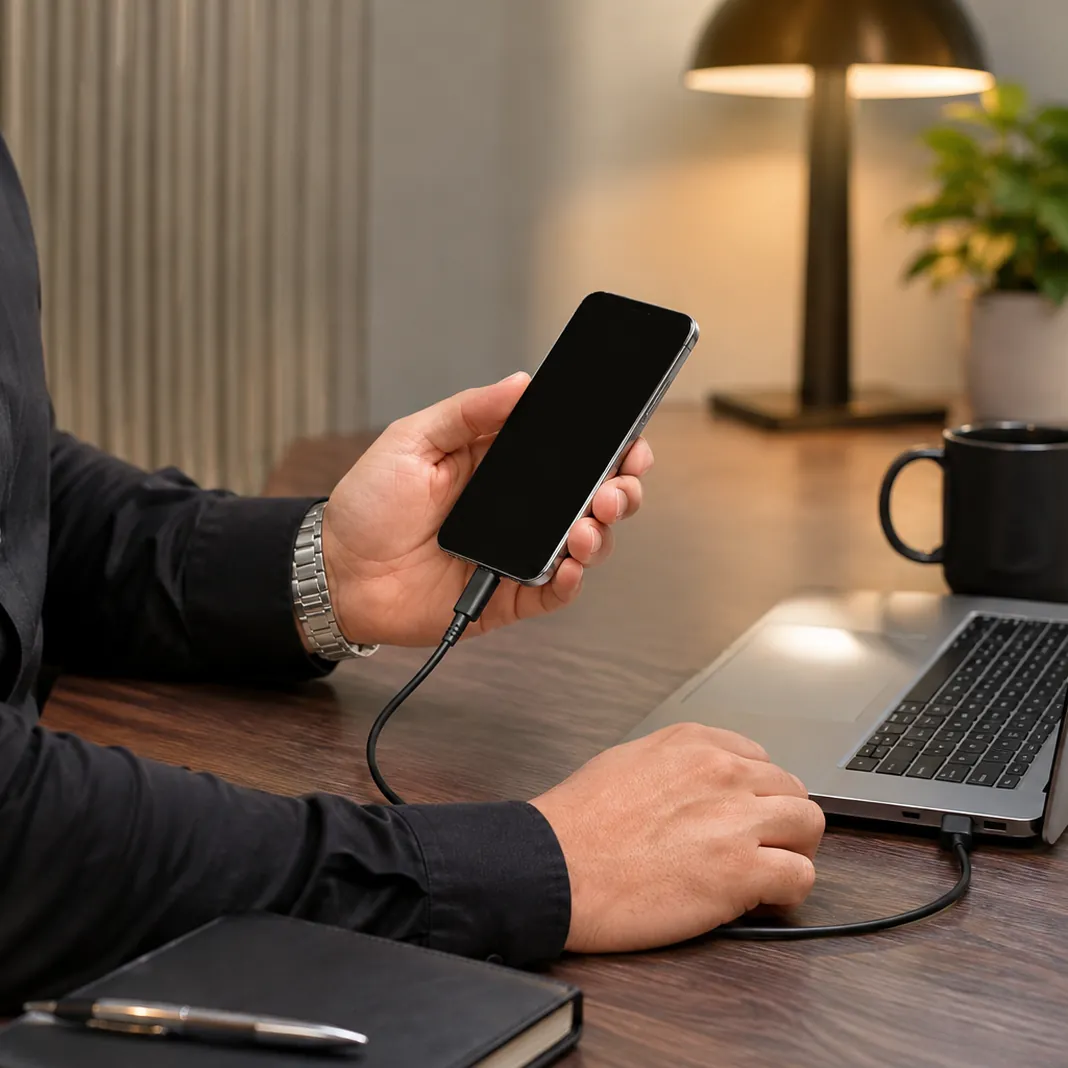
When is a check worth it for an office?
Have your office checked when it is about to host a meeting whose details would do real harm if they leaked. Since the known UK cases have been about fraud, base your decision on what is said in your own rooms.
Your IT team looks after laptops and email, and your building team looks after doors and passes. RUSI, a defence and security think tank, says technical security sits in the “grey space” between cyber security and physical security. It adds that technical security has been neglected by both business and government. Fake masts belong in that space, because they work on the phones people carry and the one in the news ran from a van outside. A TSCM (technical surveillance counter-measures) sweep is a professional search of your rooms for hidden surveillance, and it is there to fill that gap.
We find a check makes most sense at the moments when what you discuss would matter to someone outside the room:
- Before a deal, a board meeting or any meeting where the details must stay private
- After a leak, or as soon as you suspect one
- When a member of staff leaves, especially someone who sat in on sensitive meetings
- When you move into a new office or set up a new meeting room
- If you are worried about an insider threat, meaning someone inside the firm passing information out
Live devices, such as a working bug or tracker, are rare finds in the sweeps we carry out at National Bug Sweeping. Weak spots turn up on almost every one, and you can put those right before the meeting itself.
How we check an office discreetly
At National Bug Sweeping, we check for fake masts as one layer of a full TSCM inspection, alongside radio bugs, hidden cameras and trackers. Jack Charman has run our sweeps since 2020, and only trusted operatives carry out the work.
What the visit covers and costs
Each visit also covers keyloggers, which record what someone types, and rogue Wi-Fi points that nobody in your firm set up. We look for USB attack devices plugged into your computers. We also run surface-level checks on your phones and accounts, such as which other devices are linked to them. Our IMSI catcher detection covers the tracking kind of fake mast during the same visit.
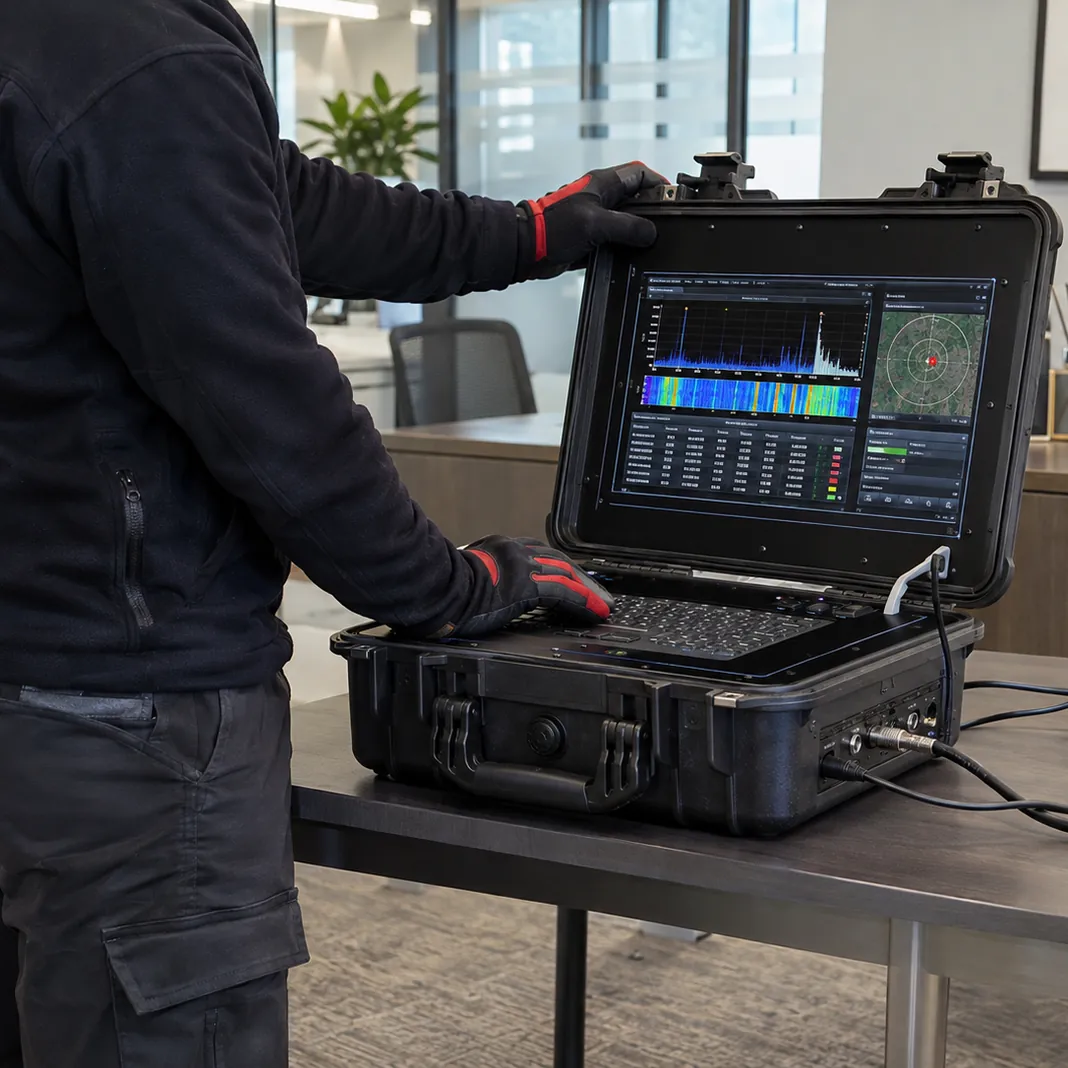
Checking a few rooms takes two to four hours, and a large property takes a around a full day. Visits are discreet, with unmarked vehicles and discreet invoicing available. You can have an NDA in place so everything we see stays confidential. You are also welcome to watch and learn as we work.
Prices start from £600 + VAT. Our office bug sweep costs £800 to £1,200 + VAT for a small office and from £1,200 + VAT for a larger one. For one important meeting, our boardroom bug sweep covers a pre-meeting sweep, live monitoring and a post-meeting check for about £3,000 + VAT. Your final quote depends on location, size, threat level and urgency, and travel is priced into each quote. Evenings and weekends cost nothing extra at all.
What you get afterwards
Every client gets a full written TSCM report with findings and advice. If we find a device – you decide whether we bag it as evidence, leave it in place or use it to set a trap. Bagged evidence can be kept with a chain of custody record – which logs everyone who has handled it.
If you want the same rooms checked again later, we offer regular TSCM sweeps, either on a set schedule or whenever the risk calls for one. We can also give a new office or meeting room a certificate of clearance once it has been swept.
Our advice also covers the gaps between physical, cyber, data and information security. That can mean changing who holds keys to your meeting rooms or bringing in a clear desk policy, where papers are cleared away at the end of each day. Check how your confidential paperwork and waste are thrown away too, because bins can be searched.
Questions firms ask us about fake phone masts
Can a fake phone mast listen to my calls?
Sometimes, because Privacy International says some IMSI catchers, the fake masts that track phones, can also intercept calls, texts and internet traffic. The device in the first UK case was an SMS blaster used for fraud texts. If your calls often cover confidential business, ask for any sweep of your rooms to include checks for fake masts.
How far can an SMS blaster reach?
The news site ISPreview estimates that an SMS blaster could reach phones from a few tens of metres away up to around 1 to 2km. Its range depends on how it is set up and where it is parked. At that range, a van in the street or a nearby car park could reach the phones inside your office.
What should staff do if they get a scam text at work?
Ask your staff not to engage with the text, to forward it to 7726, a free reporting service, and then to block the number. City of London Police give this advice to anyone who receives a suspicious text.
Does any regulator set rules for businesses on fake masts?
No, the decision is yours, because no regulator or standards body sets rules for businesses on checking for fake masts. You can add a check to a sweep whenever your own meetings and risks call for one.